


State water officials last week announced a slight increase in water they expect to deliver to homes, businesses and farms this year but warned that dry weather could shape future allocation updates.
On January 29, the Department of Water Resources (DWR) announced it would increase allocations from the State Water Project (SWP) to 30% of supplies requested, greater than the 10% announced on December 1, thanks to the mid-December storms.
The water goes to 29 public water agencies that provide water to 27 million Californians and 750,000 acres of farmland.
Impact on Water Outlook
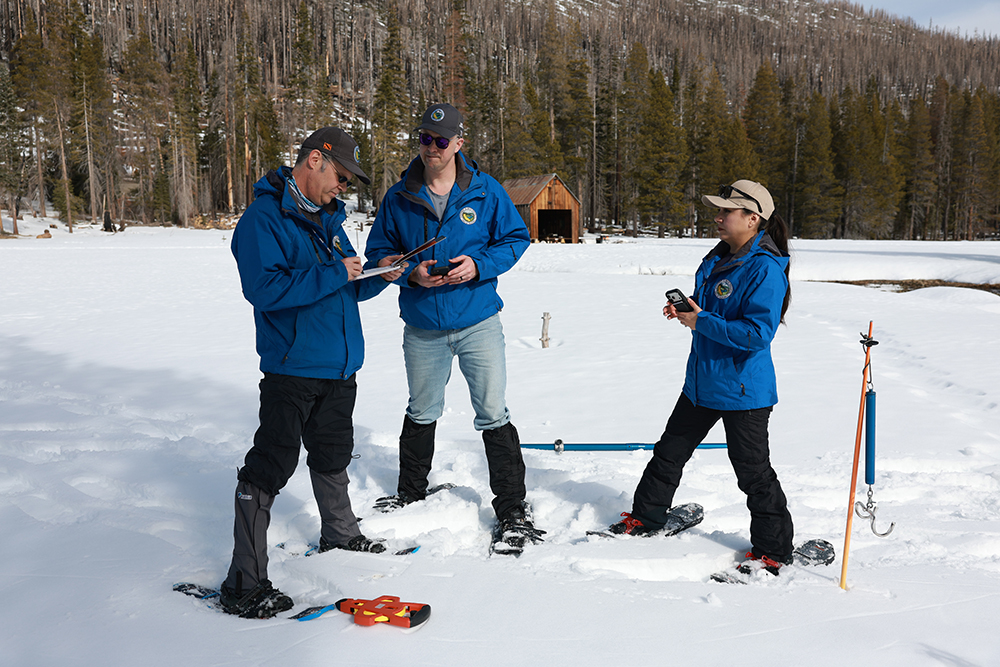
Results of the DWR manual snow survey on January 30, however, showed the impact of a dry month on the water supply outlook for the year. The survey found the snowpack was 46% of average at Phillips Station in the Sierra Nevada, compared to 89% of average just three weeks earlier.
Electronic readings from 130 stations throughout the Sierra Nevada indicated the statewide snowpack was 59% of average for the date, versus 67% last year.
“We are now two-thirds through what should be the best snow-producing months of the year,” said Andy Reising, manager of DWR’s Survey and Water Supply Forecasting Unit. “While there is still time for February and March to deliver additional snow, the farther into the season we get with below average conditions, the harder it will be to catch up.”
DWR reports that California reservoirs remain above average at 125% statewide. Lake Oroville, the largest SWP reservoir, is at 138% of average.
The department bases its allocations on available water storage, projected water supply and water demands. It updates allocations monthly, depending on analyses of snowpack, rainfall and runoff data.
The final allocation typically is set near the end of the water season in May or June. At the end of April in 2025, DWR set water allocations at 50% of the supplies requested.
DWR conducts four snow surveys at Phillips Station near the beginning of each month from January through April and sometimes in May. The next survey is tentatively scheduled for March 2.
Flexibility Needed
A wet December and dry January are reminders of California’s increasingly volatile hydrology and the need for operational flexibility to capture and deliver supplies when available.
In December, California’s Department of Fish and Wildlife issued an amendment to the incidental take permit (ITP) for the operation of the State Water Project. The ITP amendment incorporates adaptive, science-based decision making into SWP operations, increasing water deliveries when conditions permit while still protecting species.
This flexibility allowed the SWP to capture 15,000 acre-feet of additional water supply in December and January.