


Governor Gavin Newsom has proposed a $348.9 billion state budget for 2026–27, balanced without new taxes.
The proposal reflects more revenue than was expected when last year’s budget was adopted and adds to the state’s rainy day fund, state Finance Director Joe Stephenshaw explained.
The budget plan released on January 9 estimates more than $42 billion in added General Fund revenue compared to what was expected last June. As a result, the projected budget deficit has dropped to $2.9 billion instead of the $18 billion anticipated last year.
California enters the 2026–27 fiscal year with $23 billion in total reserves, including $14.4 billion in the rainy day fund, Stephenshaw said when releasing the budget proposal and again at CalChamber’s annual webinar on the budget, livestreamed on January 12 with an introduction by CalChamber President and CEO Jennifer Barrera.
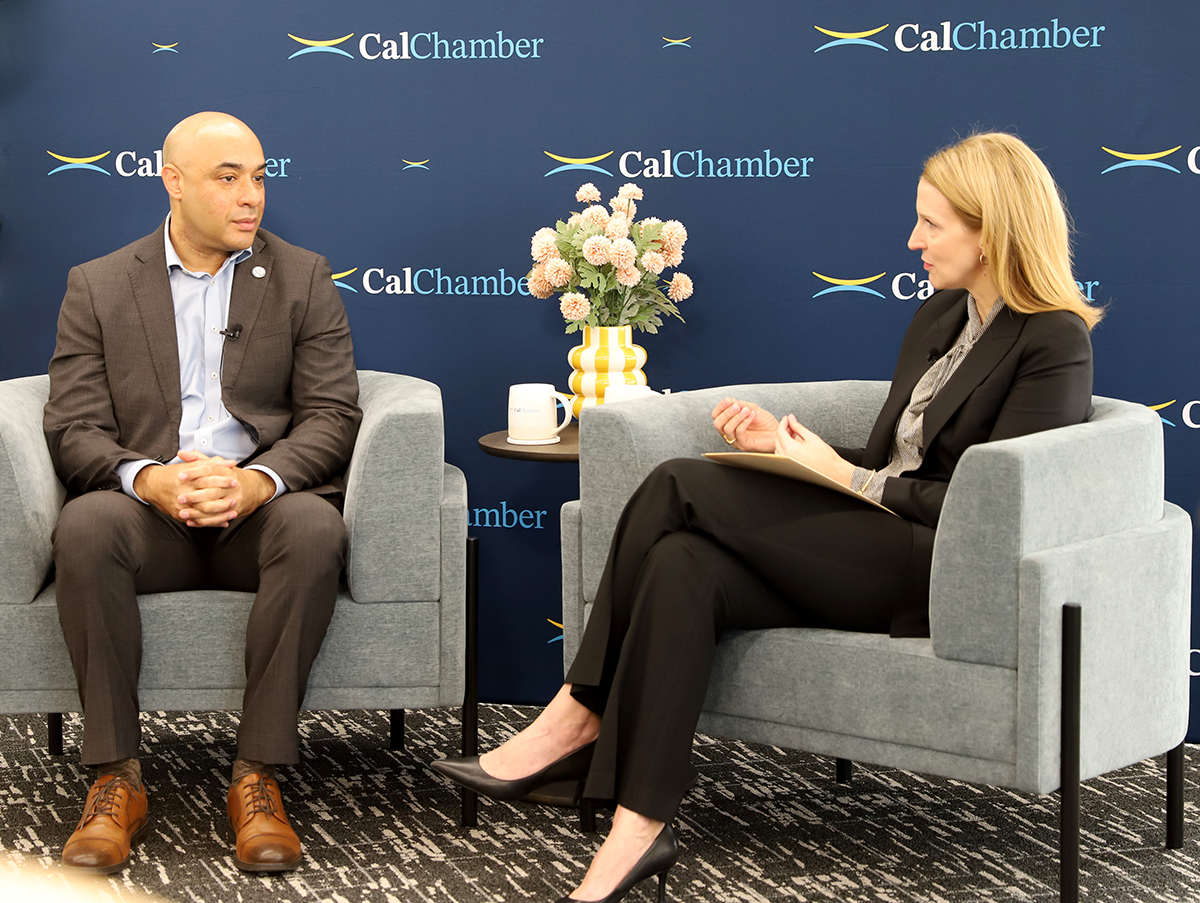
In his webinar remarks and in response to questions from Barrera, Stephenshaw outlined the budget plan’s approach. Instead of making new commitments, the Governor proposes continuing existing programs, reducing state operations spending by $1.55 billion, and eliminating about 6,000 long-vacant positions to generate an estimated $1.2 billion in savings over two years.
Citing the positive signs in state revenue, Stephenshaw said the commitment to no new taxes is part of the state’s “sound fiscal plan going forward.”
To help balance the budget in previous years, the ability of businesses to use the net operating loss (NOL) deduction was suspended from 2024 through 2026. In response to a question from Barrera, Stephenshaw said the administration has no plans to extend the suspension.
Budget Uncertainties
Adding to the historic volatility of state budget revenues is the global uncertainty due to the impact of unpredictable federal policy changes on tariffs, immigration, inflation and the labor market.
Stephenshaw said California has yet to see the full impact of cutbacks to health and human services programs due to federal H.R. 1, the “Big Beautiful Bill,” and is waiting for full guidance from the U.S. administration.
The state budget program for 2026–27 plans on an additional $1.4 billion in costs — $1.1 billion in Medi-Cal, which provides basic health care services for more than 14 million low-income Californians, and $300 million in added costs for CalFresh, which provides food assistance to more than 3 million California households.
Key Investments
Among other priorities, the budget plan proposes:
- A new education governance structure — moving the California Department of Education under the Executive Branch and strengthening the ability of the State Superintendent of Public Instruction to align policy from early childhood through higher education — improving coordination, clarity, and accountability across the system.
- Establishing a dedicated housing and homelessness agency to oversee the coordination, accountability, and effective program delivery across state programs. In addition, the state will allocate $500 million in 2026–27 for the homeless housing, assistance and prevention program.
- Adding $3 billion to the rainy day fund, which has helped the state manage revenue volatility.
- Paying down pension obligations — $3 billion in next year’s budget; $11.8 billion over the next four years.
- Expanding college and career pathways with new funding to help high school students earn college credit and explore career pathways earlier, including expanding dual enrollment and credit programs.
- Higher education investments — $5.3 billion for the University of California, $5.6 billion for the California State University, and $15.4 billion for the California Community Colleges.
More Information
For more information, view the CalChamber Webinar: A Closer Look at California’s Budget, livestreamed on January 12.
To see the full text of the Governor’s budget summary document, visit ebudget.ca.gov.