


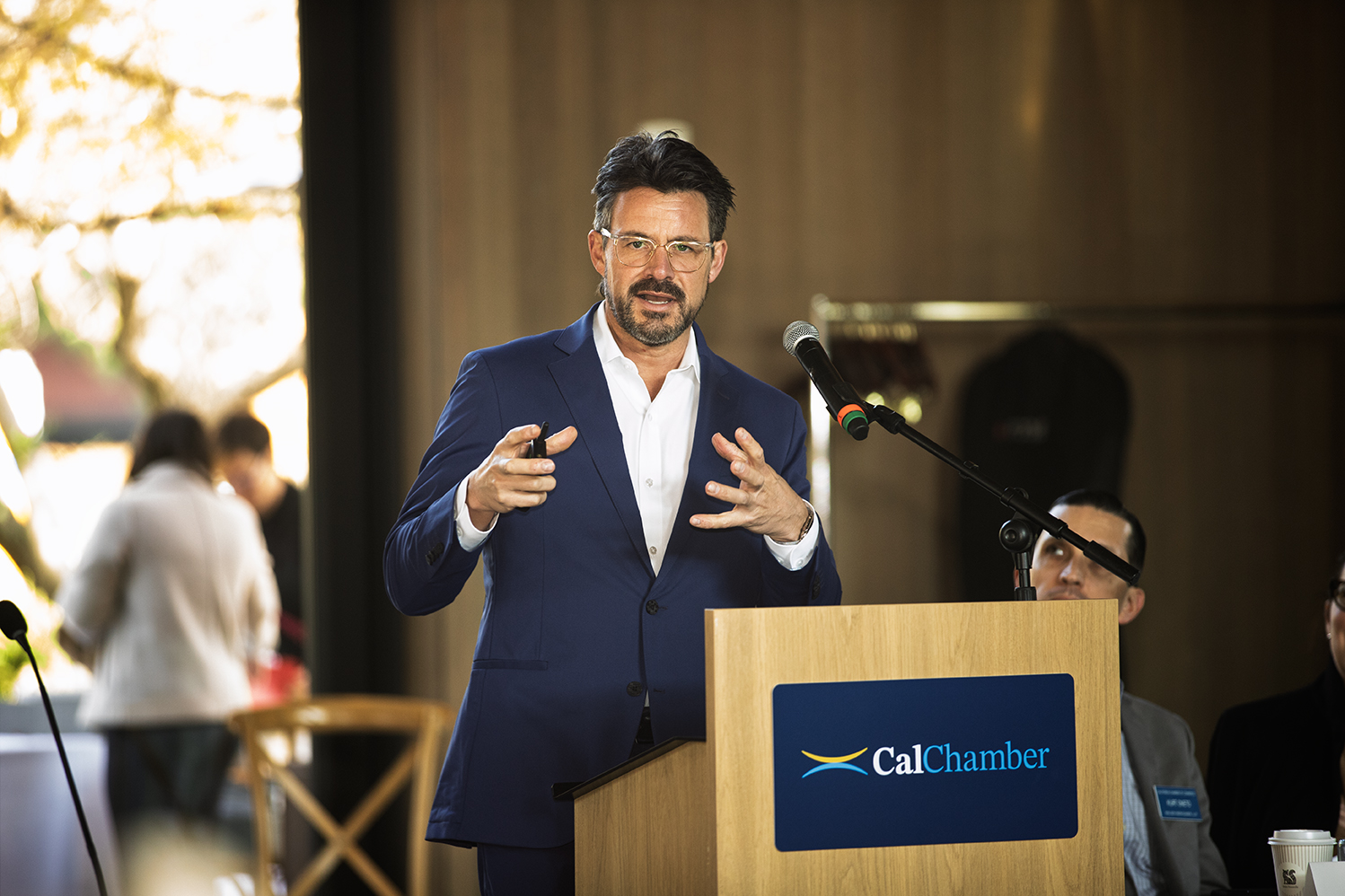
Growing personal income tax collections have been a “bright spot” in the state’s fiscal outlook in recent months, California Legislative Analyst Gabriel Petek told the CalChamber Board of Directors last week.
But because spending also is higher, the state’s estimated budget deficit for the 2026–27 fiscal year is $18 billion, instead of the $13 billion projected in June when lawmakers adopted the budget, Petek said.
His presentation to the CalChamber Board summarized The 2026–27 Budget: California’s Fiscal Outlook report from the Legislative Analyst’s Office (LAO).
Constitutional spending requirements meant that much of the $11 billion in higher-than-expected income tax revenue went to education and paying down debt, Petek explained.
On the other side of the ledger, spending was higher by about $6 billion, including an estimated $1.3 billion in higher costs due to the recently enacted federal law, H.R. 1 (One Big Beautiful Bill Act).
Looking ahead, the LAO projects an annual state budget deficit of $35 billion starting in the 2027–28 fiscal year because of a “structural misalignment” of slower revenue growth when matched against elevated expenditures.
Petek commented that in the last four years, many budget solutions have been one-time maneuvers, such as deferred spending, shifting funds between accounts, tapping into budget reserves, and temporary revenue increases like suspending the ability of businesses to claim net operating losses (NOL).
The LAO’s fiscal outlook report doesn’t provide specific budget recommendations to the Legislature, Petek noted, but its overarching guidance to policy makers is that they should try to put the state’s fiscal structure into alignment with income and reduce expenditures on an ongoing basis.